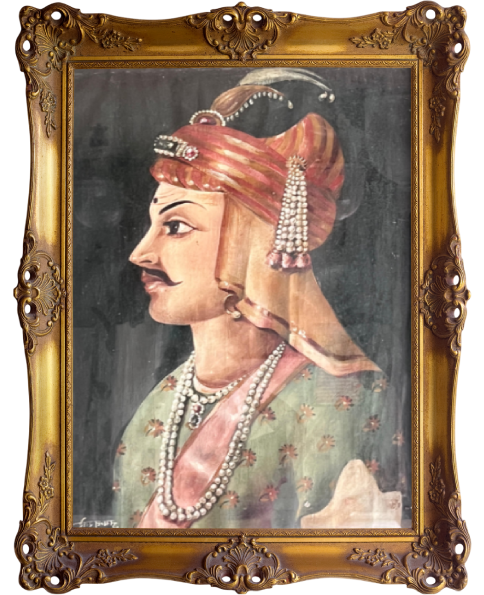
The Peshwa's Path
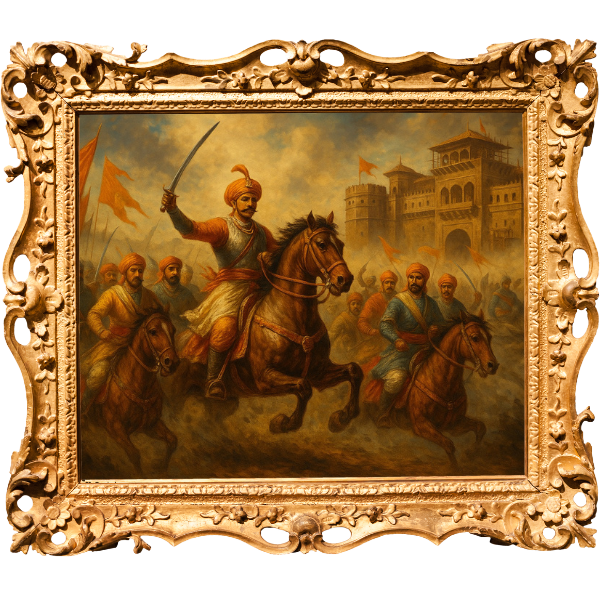
The Rise of Thorle Bajirao
Born into a legacy of valor, Bajirao Ballal emerged as a fearless strategist. From childhood battles to the Peshwa title, his path was shaped by action.
Key Highlights:
- Born on 18 August 1700 (Sunday); childhood names were Vishwasrao and Visaji.
- Named “Bajirao” after a legendary warrior his father admired while reading.
- Accompanied his father Balaji Vishwanath on campaigns from the age of 12.
- Gained deep knowledge of diplomacy, warfare, and governance through lived experience.
- Appointed as the Peshwa by Chatrapati Shahu Maharaj on 17 April 1720, despite court opposition and he accompanied Balaji Vishwanath to Delhi in 1719.
- Immediately led a campaign to aid Hussain Ali Sayyid and defeated the Nizam.
- Believed in the principle: “Listen to all, but act with conviction.”
The Conqueror of the North
Bajirao’s sharp tactics expanded the Maratha empire across India. His victories shaped political power from Pune to Bundelkhand.
Key Highlights:
- Defeated Daud Khan Panni in 1715 Malwa and signed the Varsoli treaty with the Portuguese.
- Between 1723 and 1730, Bajirao I launched multiple successful campaigns in Malwa and Gujarat, expanding Maratha influence in the region.
- Crushed the Nizam in the 1728 -1729 - 'Battle of Jaitpur', securing a decisive treaty.
- In 1729, Bajirao I aided Raja Chhatrasal of Bundelkhand against Mughal general Muhammad Khan Bangash and received one-third of Bundelkhand, including Jhansi, Sagar, and Kalpi.
- In 1728, Bajirao I declared Pune the Peshwa capital; he initially stayed in Kasba Peth and later built the Shaniwar Wada as his residence.
- Defeated Sardar Trimbak Dabhade at Bhilapur in 1731 and later reconciled with his family.
- In 1735, Bajirao I campaigned in northern India to address tribute disputes with Jaipur, but his most decisive northern expedition was in 1737–38 during the Bhopal campaign against the Mughals.